
Like many other professions, nursing was hit hard during the Great Depression. Unemployment ran high and numerous other issues followed. One of the most impactful pieces from the Depression is the Survey of Nursing Education in Canada. The report caused a series of changes such as the closing of hospital schools and greatly raising the requirements to join the profession. One noteworthy part of the survey is its call for the socialization of the practice. The writer, Dr. Weir states “Economic obstacles that separate the patient from the nurse should be removed… socialization of nursing services, with adequate distribution of the financial burden through a form of state health… is an important factor in any successful attack on Canada’s major health problem.” Unemployment continued at a steady rate until the second world war began and many nurses were called overseas to contribute to the war.
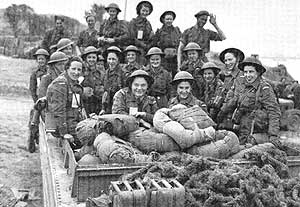
At the onset of the war many old restrictions still applied such as being unmarried and without children, as well as graduating with the proper education. Nurses that served in the military during the war were commissioned officers, granting them a certain amount of power in the military. Due to the high influx of nurses going overseas, as well as the broadening of careers for women in general at this time, there was a shortage of nurses in some provinces which would continue until well after the war. Due to the high demand for the profession, it granted women and nurses more power to collectively bargain for worker’s rights such as fighting for the eight-hour day. After the war many nurses left the workforce while the profession itself made changes to adjust to peacetime conditions. The following decades had lots of change for health organizations, such as reconstructions and renovations of hospitals. Possibly the most important changes for the profession and for Canadians as a whole was the passage of the Medical Care Act and the Royal Commission on Health Services in the 60’s which provided universal health care for the country.
 Nursing In Canada